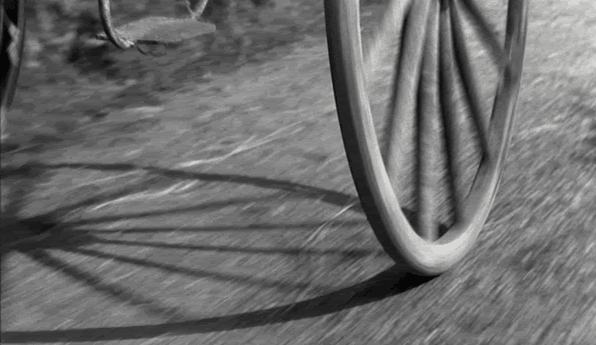
De 2 a 30 de Março de 2009
5 aulas, às segundas-feiras, das 18h30 às 20h30h

Neste curso será abordada umas das cinematografias mais originais dos últimos cinquenta anos. O estilo despojado, onde nada devia estar a mais nem a menos, é o oposto do espectáculo, sem, no entanto, se tornar abstracto ou teórico.
Os diálogos reduzem-se a enunciados sem entoação, os actores não representam - todos cumprem destinos silenciosos e encontram a libertação por trilhos do acaso.
No entanto, Robert Bresson queria que o silêncio e ruídos se tornassem música - a música de todos os dias. Sensualmente, como os olhares que se cruzam, as mãos que quase se tocam e os seres que se redimem, a câmara também se move sem que a técnica seja detectada. A sua função é paralela ao vento que sopra onde quer, religando o visível ao invisível.

***

    Por coincidência, até ao final de Março decorre na Cinemateca um ciclo dedicado a Robert Bresson, cuja programação pode ser consultada aqui.
    A retrospectiva iniciou-se com uma instalação escultórica de Rui Chafes, dedicada ao realizador, sob o lema do Pickpoket e lançamento de livro com textos e poemas de João Miguel Fernandes Jorge, que inclui fotografias feitas por Rita Azevedo Gomes a partir dos filmes.

Sessões aulas no AR.CO.

Sessões Cinemateca

2 - 3– Les Dames du Bois de Boulogne

1- Les dames du bois de Boulogne- dia Sex. 27 de Fevereiro 19:00 - Sala Dr. Félix Ribeiro

9- 3- Un Condamné à Mort s'Est Échappé + Pickpoket

3- Un Condamné à Mort s'Est Échappé- Cinemateca dia 6-3-09 19:00h + Pikpocket – Cinemateca- dia 19 de Fevereiro - 21:30

16-3- Le Procés de Jeanne d’Arc

4- Le Procés de Jeanne d'Arc- Cinemateca dia 9-3 19 :00h

23-3- Au Hasard Balthazar

5- Au Hasard Balthazar- Cinemateca dia 11-3 21.30h

30-3- Mouchette

6- Mouchette- Cinemateca 25-3-09 19:30


Robert Bresson: Acredito na musa do cinema. Degas dizia: "As musas não falam entre si, elas dançam juntas"-no programa de televisão Pour le Plaisir de 11 de Maio de 1966 dedicado a "Au Hasard Balthazar".

2.3.09

Tudo o que é importante é instintivo
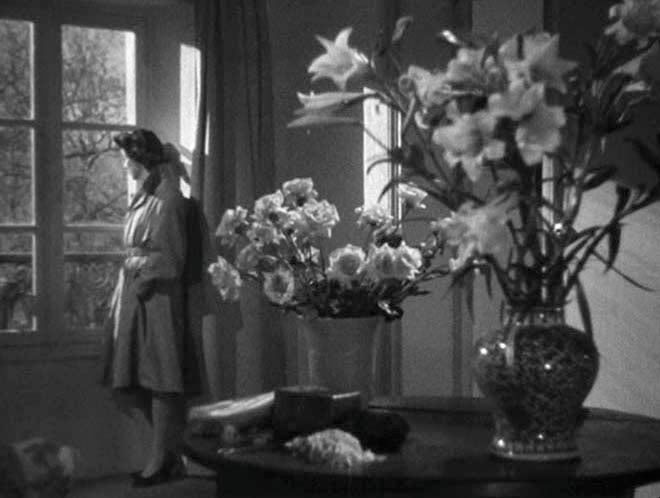

[Les Dames du Bois de Boulogne]

Did you and Cocteau agree completely when you were working on the script?

B: You know, Cocteau did very little. I initially wrote all the dialogue myself, retaining as much of Diderot as I could, but inventing the story of the two women whom Helene uses. Their behavior and what happens to them in my film aren't in Diderot. What I needed Cocteau for was to help me blend Diderot's dialogue with my own. This he did magnificently in ten minutes, out of friendship for me. And since he was Cocteau and I was not known as a writer, I asked him to take credit for the dialogue.

S: Actually, as is well known, your adaptation of Diderot changes the spirit of the tale completely. Diderot's story is comic and emphasizes class distinctions. Why did you want to film this if you didn't intend to film it as written?

B: It was my second film, and I needed an adaptation because producers are more difficult about original scripts. I admired the story of Madame de la Pommeraye from Jacques le fataliste because it was well constructed and dramatic, not comic as you seem to think. I merely used his basic situation and much of his dialogue, adding characters, scenes, and so forth to make a film about things that did interest me.

S: Why did you change the period and bring the story up to date?

B: Because I think that costume drama violates the essence of cinema, which is immediacy. The period I was able to change because feelings - unlike clothes - don't change from century to century.

S: You say always that you're a demon for truth, yet this film is obviously stylized.

B: But style goes very well with truth.

S: I find symbolism in this film. Was it deliberate? For example, when Jean comes to ask Helene to arrange a meeting with Agnes, Helene stands in front of the fireplace suppressing her jealousy, but we see it reflected in the raging fire at her side.

B: I don't remember if I meant it that way. I never look for symbolism.

S: Take another instance. Helene is frequently seen in front of mirrors, suggesting what is true: that there are two Helenes, the self she pretends and the one she really is.

B: That wasn't deliberate, but you teach me now what I ought to have done or what I did without realizing it. Because you see, luckily, everything important is instinctive. One mustn't plan every detail in advance. I agree with Valery: One works to surprise oneself.

S: There are many more fades in Diary of a Country Priest than in Les Dames du Bais de Baulogne. Are you deliberate about the number and kind of transitions? In Une Femme douce there are no fades at all.

B: Because more and more I try to be quick. Moreover, to produce a fade in a color film, you have to superimpose one negative over another, and that destroys the quality of the shot. As I have always said, a film is not its shots, but the way they have been joined. As a general once told me, a battle occurs very often at the point where two maps touch.

Charles Thomas Samuels -INTERVIEWS -Robert Bresson, Paris, September 2, 1970

0 comentários:

Filmografia

_1934 > Les Affaires Publiques-Inédito comercialmente em Portugal-Primeira apresentação em Portugal: Cinemateca Portuguesa - Museu do Cinema, a 1 de Junho de 1990
_1944 >Les Anges du Péché-Estreia mundial: 23 de Junho de 1944-Inédito comercialmente em Portuga-lPrimeira apresentação em Portugal: Grande Auditório da Fundação Calouste Gulbenkian, integrado no Ciclo Robert Bresson, a 5 de Abril de 1978

_1945 >Les Dames du Bois de Boulogne-Estreia mundial: Paris, 21 de Setembro de 1945-Inédito comercialmente em Portugal-Primeira apresentação em Portugal: Cine Clube do Porto, Cinemas Batalha e Águia de Ouro, a 21 de Novembro de 1954

_1951 >Journal d'un Curé de Campagne-Estreia mundial: Festival de Veneza, 1951-Inédito comercialmente em Portugal frequentes exibições, em cine-clubes, nos anos 50, em cópia jamais distribuída-Primeira apresentação em Portugal: Iniciativa do Centro Cultural de Cinema (Cine-clube de universitários para uma cultura cristã) a 30 de Maio de 1957, no Jardim Cinema

_1956 >Un Condamné à Mort s'est Echappé (ou Le Vent Souffle ou Il Veut) -Estreia Mundial: Paris, 4 de Dezembro de 1956- Estreia em Portugal: Cinema Império, a 14 de Abril de 1959

_1959 >Pickpocket-Estreia Mundial: Paris, 12 de Janeiro de 1960-Estreia em Portugal: Cinema Tivoli, 26 de Junho de 1961

_1962 >Procès de Jeanne d'Arc-Estreia Mundial: Festival de Cannes, 30 de Maio de 1962-Inédito comercialmente em Portugal-Primeira apresentação em Portugal: nos anos 60, em sessão privada no São Luiz

_1966 >Au Hasard Balthazar-Estreia Mundial: Paris, 6 de Maio de 1966-Ante-Estreia em Portugal: Cinema Londres, a 26 de Novembro de 1972-Estreia em Portugal: Cinema Satélite, a 12 de Julho de 1974

_1967 >Mouchette-Estreia Mundial: Paris, 28 de Maio de1967-Estreia em Portugal: Cinema Vox, a 3 de Julho de 1972

_1969>Une Femme Douce Estreia Mundial: Paris, 28 de Agosto de 1969-Estreia em Portugal: Cinema Estúdio (Porto), a 21 de Julho de 1970

_1971 >Quatre Nuits d'un Rêveur-Estreia em Portugal: Lisboa(cinema Estúdio), 5 de Janeiro de 1972

_1974 > Lancelot du Lac-Estreia Mundial: Festival de Cannes, Maio de 1974- Estreia em Portugal: Cinema Ávila, em 29 de Maio de 1998

_1977 > Le Diable Probablement-Estreia Mundial: Paris, 14 de Junho de 1997-Inédito comercialmente em Portugal Primeira apresentação em Portugal: Grande Auditório da Fundação Calouste Gulbenkian, integrado no Ciclo Robert Bresson, em Abril de 1978

_1983 >L'Argent-Estreia Mundial: Paris, 18 de Maio de 1983, depois de exibido no Festival de Cannes, Maio de 1983- Inédito comecialmente em Portugal- Primeira apresentação em Portugal: Cinemateca Portuguesa, a 19 de Setembro de 1983

in- Folhas da Cinemateca, Cinemateca Portuguesa, Setembro de 2001

Bibliografia

Escritos de Bresson

• Bresson,Robert, Notas sobre o Cinematógrafo, tradução de Pedro Mexia, Elementos Sudoeste, Porto Editora,(Janeiro 2004)
• Bresson, Robert.
"Notes on Sound."Translated by Jonathan Griffin. In Film Sound: Theory and Practice, edited by Elisabeth Weis and John Belton, 149. New York: Columbia University Press, 1985.
• Bresson, Robert. "Qui? Pourquoi? Comment?" Cahiers du cinéma, no.161-162
(January 1965): 14,15
• Bresson, Robert. "Réponse de Robert Bresson á François Leterrier." Cahiers du cinéma, no. 67 (January 1957): I.

Textos acerca de Bresson

• Armes, Roy. "Innovators and Independents: Robert Bresson." In Great Film Directors: A Critical Anthology, edited by Leo Braudy and Morris Dickstein. New York: Oxford University Press, 1978.
• Arnauld, Philippe. Robert Bresson. Cahiers du cinéma. Collection "Auteurs." Paris: Cahiers du cinema, 1986.
• Ayfre, Amédée. "The Universe of Robert Bresson." In The Films of Robert Bresson, edited by Ian Cameron. New York: Praeger Publishers, 1970.
• Bazin, André. "Le Journal d'un curé de campagne and the Stylistics of Robert Bresson." In What is Cinema 2 Volumes, edited and translated by Hugh Gray. California: University of California Press, 1967.
• Bordwell, David, and Kristen Thompson. "Sound in the Cinema. Functions of Film Sound: A Man Escaped. " In Film Art: an Introduction. Reading, Mass.: Addison-Wesley, 1979.
• Ciment, Michel. "I Seek Not Description But Vision: Interview with Robert Bresson." Projections 9, edited by Walter Donohoe and John Boorman, translation Pierre Hodgson. London: Faber and Faber Limited, 1998.
• Daney, Serge and Serge Toubiana. "Entretien avec Robert Bresson." Cahiers du cinéma, nos. 348-349 (June/July 1983): 12-15.
• Delahaye, Michel and Jean-Luc Godard. "The Question: Interview with Robert Bresson." Cahiers du cinéma in English, no.8 London: British Film Institute
Publishing, 1967.
• Doniol-Valcroze, Jacques, and Jean-Luc Godard. "Entretien avec Robert Bresson." Cahiers du cinéma, no. 104 (February 1960): 3-9.
• Durgnat, Raymond. "Diary of a Country Priest." Films and Filming 13, no.3 (December 1966): 28-32.
• Estève, Michel. "Bresson et Bernanos." Cinéma 72-92, no.294 (June 1983): 12-17.
• Hanlon, Lindley. Fragments: Bresson's Film Style. Rutherford N.J.: Fairleigh Dickinson University Press, 1986.
• Hodara, Philippe. "Entretien avec Robert Bresson." Lumière du cinéma, no.6(July/August 1977):15-17, 80.
• Hourigan, Jonathan. "On Two Deaths and Three Births. The Cinematography of Robert Bresson." Stills I , no. 3 (Autumn 1981): 27-38.
• Kovacs, Yves. "Entretien avec Robert Bresson." Cahiers du cinéma, no.140 (February 1963): 4-10.
• Lambert, Gavin. "Un condamné á mort s'est échappé." Sight and Sound 27, no.I (Summer 1957): 32-33, 53.
• Loiselle, Marie-Claude. "Poetique du montage." 24 Images, no.77 (Summer 1995): 12-15.
• Lopate, Philip. "Films as Spiritual Life." Film Comment 27, no.6 (November/ December 1991): 26-30.
• Magny, Joël. "L'expérience intérieur de Robert Bresson." Cinéma 72-92, no.294 (June 1983): 19-26.
• Murray, Leo. "Un Condamné à Mort s'est Échappé." In The Films of Robert Bresson, edited by Ian Cameron. London: Studio Vista Limited, 1969.
• Oudart, Jean-Pierre. "Bresson et la vérité."
Cahiers du cinéma, no. 216 (October 1969): 53-56.
• Polhemus, Helen M. "Matter and Spirit in the Films of Robert Bresson." Film Heritage 9, no. 3 (Spring 1974):12-16.
• Prédal, Réné. "Robert Bresson: L'Aventure intérieure." L'Avant-Scène, nos. 408/409 (January/February 1992.)
• Quandt, James, ed. "Introduction." In Robert Bresson. Toronto: Toronto International Film Festival Group, 1998.
• Reader, Keith. "D'où cela vient-il? : Notes on three films by Robert Bresson." French Studies 40, no. 4,1986.
• Richie, Donald. "Bresson and Music." In Robert Bresson. edited by James Quant. Toronto: Toronto International Film Festival Group, 1998.
• Rosenbaum, Jonathan. "The Last Filmmaker: A Local, Interm Report."Chicago Reader (26 January 1996).
• Samules, Charles Thomas. "Robert Bresson." In Encountering Directors. New York: Capricorn Books, 1972.
• Schofer, Peter. "Dissolution in to Darkness: Bresson's Un Condamné á mort s'est échappé." Substance, no. 9 (1974):59-66.
• Schrader, Paul. Transcendental Style in Film: Ozu, Bresson, Dreyer. Berkeley and Los Angeles: University of California Press, 1972.
• Sitney, P. Adams. "Cinematography vs. the Cinema: Bresson's Figures." In Modernist Montageby P. Adams Sitney. Columbia University Press, 1989.
• Sloan, Jane. Robert Bresson: a guide to references and resources. Boston, Mass.: G.K. Hall, 1983.
• Sontag, Susan. "Spiritual Style in the Films of Robert Bresson." In Against Interpretation by Susan Sontag. New York: Farrar, Straus & Giroux, Inc.,1964
• Thiher, Allen. "Bresson's Un Condamné À Mort: The Semiotics of Grace." In The Cinematic Muse: Critical Studies in the History of French Cinema by Allen Thiher. Missouri: University of Missouri Press, 1979.

Online: Encountering Directors-Charles Thomas Samuels -Intervews- Robert Bresson,Paris, September 2, 1970

Cinematógrafo

---------------------------------

Quando não sabes o que fazes» e que o que fazes é o melhor, é isso a inspiração

*

Traduzir o vento invisível pela água que ele esculpe ao passar

*

Esvaziar o tanque para apanhar os peixes

*

Não uma bela fotografia, não belas imagens, mas imagens e fotografias necessárias

*

Provocar o inesperado. Esperá-lo

*

Não corras atrás da poesia. Ela introduz-se por si mesma através das articulações

*

Modelo. Ele fecha-se em si mesmo. Assim faz x, excelente actor. Mas é para reaparecer máscara de jogo, irreconhecível

*

Problema: fazer ver o que vês por intermédio de uma máquina que não o vê como tu vês

*

OS LAÇOS QUE ESPERAM OS SERES E AS COISAS PARA VIVER

*

Faz aparecer o que sem ti porventura nunca seria visto

*

O verdadeiro é inimitável, o falso intransformável

*

Querem encontrar a solução aí onde só há enigma (Pascal)

*

Comunicar impressões, sensações

*

Retocar o real com o real

*

Montagem. Fósforo que sai de repente dos teus modelos, flutua em redor deles e liga-os aos objectos.

(azul de Cézanne, cinzento de Greco)

*

Ritmos.

O poder supremo dos ritmos.

Não é durável se não o que é captado pelos ritmos.

Dobrar o fundo à forma e o sentido aos ritmos

*

Qualidade de um mundo novo que nenhuma das artes existentes deixaria suspeitar

*

O real não é dramático. O drama nascerá de uma certa marcha de elementos não-dramáticos

Expressão por compreensão. Pôr numa imagem o que um literato demoraria por dez páginas

*

Com o nítido e o preciso forçarás a atenção dos desatentos de olhos e de ouvidos

*

O real em bruto não resulta por si mesmo no verdadeiro

*

No rito católico-grego: «Está atentos!»

*

A emoção nascerá de uma mecânica, do constrangimento a uma regularidade mecânica.

Pensar em certos grandes pianistas para o compreender

*

Fazer leis de ferro nem que seja para obedecer ou desobedecer com dificuldade

*

Dar aos objectos o ar de terem vontade de lá estar

Olha como um pintor. O pintor cria ao olhar

*

Que poder têm as coisas que conseguimos por acaso!

*

Tirar as coisas do hábito, descloroformizar

*

O silêncio é necessário à música mas não faz parte da música. Ela apoia-se nele

*

Cézanne: «a cada pincelada arrisco a vida»

slideshow

  © Blogger template 'Photoblog II' by Ourblogtemplates.com 2008

Back to top